All-on-4 vs Dentures vs
Traditional Implants
Four ways to replace a full arch of teeth, compared honestly — including where All-on-4 is not the best choice.
- 4.9 on Google · 800+ reviews
- Dr Jignesh Patel, GDC 81168
- Morden & Surbiton
The short answer
All-on-4 gives you fixed teeth that you never take out, supported by four implants, and it preserves jawbone that dentures cannot. Conventional dentures cost far less upfront but move when you eat and need relining as the jaw changes. Traditional full-arch implants use more implants and usually cost more.
The four options side by side
Every cell here is a plain answer rather than a sales line. Where an option is weaker, the table says so.
| All-on-4 | Conventional dentures | Implant-retained dentures | Traditional full-arch implants | |
|---|---|---|---|---|
| Number of implants | Four per arch, the back two tilted forwards | None | Usually two to four per arch, placed at the front | Six to eight per arch, occasionally more |
| Fixed or removable | Fixed. Only your dentist takes it off, with instruments | Removable. Out for cleaning and usually out overnight | Removable by you, but clipped down so it does not lift while you eat | Fixed |
| Time to fixed teeth | Same day for the temporary arch; final arch after about six weeks | Never fixed, but a first set is usually ready within a few weeks | Three to six months, since the implants heal before the denture is clipped on | Commonly six to twelve months, and longer where grafting comes first |
| Bone grafting usually needed | Often avoided, because the tilted implants reach bone that is already there; included in our price where it is needed | Never needed | Sometimes, though front implants often sit in bone that has survived well | Needed more often, because each implant must go roughly where a root used to be |
| Effect on jawbone | Chewing loads the bone around the four implants, which helps preserve it there | Preserves nothing. The ridge carries on shrinking, which is why relines are needed | Bone preserved around the implants; the ridge behind them still resorbs | Bone preserved at more points along the arch, because there are more implants |
| Chewing ability | Close to natural for most foods; very hard or brittle items still need care | The weakest of the four. Biting into firm food is hard and a lower denture moves most | A large improvement on a conventional denture, but short of a fixed arch | The strongest of the four, with bite force shared across more implants |
| Effect on speech | A week or two of adjustment, then usually easier than a denture was | Can cause a lisp or a click, and the denture may lift as you talk | Steadier than a conventional denture, so less clicking; the plate is still bulky | A similar short adjustment to All-on-4, and often the least bulky of the four |
| Palate coverage and taste | An upper arch leaves the palate uncovered, so taste and hot and cold feel normal | An upper denture usually covers the palate for suction, dulling taste and temperature | An upper version can often be horseshoe-shaped, though some palate coverage may remain | Palate left uncovered, as with All-on-4 |
| Daily cleaning | Brush the arch, then clean underneath it daily with a water flosser and interdental brushes | Take it out, brush and soak it, and brush the gums underneath separately | Take it out and clean it, plus clean around each implant and its clip attachment | Brush, plus interdental cleaning around every implant and beneath each span of bridgework |
| Typical upfront cost per arch | £10,950 at ConfiDental Clinic — a fixed price, not a starting figure | The least expensive of the four by a wide margin | More than a conventional denture, less than a fixed arch on implants | Usually more than All-on-4, and more again where grafting is required first |
| Maintenance over ten years | Hygienist visits two to three times a year; the arch may need repair or replacing; a night guard if you grind | Relines every few years and a remake once the fit can no longer be corrected | Relines, plus clip attachments that wear and are replaced periodically | Hygienist visits; single crowns or sections can be repaired without disturbing the rest |
Not sure which of these is right for you?
Send four photos of your teeth and your medical history from your phone. Our clinical team reviews them and comes back within one business day with an honest view of your options — free, and with no obligation.
All-on-4 vs traditional full-arch implants
The difference is how many implants are used and where they are put. All-on-4 places four per arch, tilting the back two forwards into bone that has survived. Traditional full-arch treatment places six to eight or more, upright, roughly where the roots used to be. That second approach costs more, takes longer and needs grafting far more often — but it buys things that are worth understanding rather than dismissing.
Start with time, because it is the difference patients feel most. Conventional treatment is usually staged: teeth out, a few months of healing, grafting or a sinus lift where the back bone has gone, another four to nine months for that to mature, then the implants, then three to six months for them to integrate, then the bridgework. Twelve to eighteen months is common, and much of it is spent in a removable temporary denture. All-on-4 compresses the surgical side into one appointment and leaves you in a fixed temporary arch from that day onwards.
Cost follows the same logic. Four implants instead of eight, one surgical visit instead of several, usually no grafting, and one arch made in the laboratory rather than several sections. That is where the price gap comes from, and it is a real gap rather than a discount.
What the extra implants buy is redundancy and repairability. Losing one implant out of eight is an inconvenience; losing one out of four is a bigger event, even though three can usually carry a temporary arch while the site heals. Traditional work is also often restored in separate sections, so a fractured crown or a damaged span can be taken off and dealt with while the rest of your teeth stay in your mouth. With All-on-4 the arch is a single piece, and a repair generally means the whole thing comes off and goes to the laboratory. More implants placed further back also shorten the unsupported stretch of arch behind the last one, which matters if your bite is heavy.
So on all on 4 vs traditional implants, the honest position is this. Traditional treatment is genuinely the better answer when you have plenty of good bone, when you grind heavily or generate high bite forces, or when you would rather have teeth restored in sections you can maintain and repair separately. All-on-4 is the better answer for most people whose ridge has already resorbed, who want fixed teeth without a year of waiting, and who would rather not add a bone graft to the plan. The scan and your own priorities decide it.
The honest pros and cons of All-on-4
The short version of the all on 4 dental implants pros cons balance: the advantages are about how the teeth feel to live with, and the drawbacks are about surgery, money and commitment. Both lists below are worth reading before you decide.
What All-on-4 does well
- The teeth are fixed. No adhesive, nothing to take out at night, nothing that shifts while you are talking to someone.
- You are not seen without teeth. A fixed temporary arch goes on at the end of the surgical appointment, so there is no period of going out in a gap or a stopgap denture.
- Chewing gets close to normal. Most people go back to food that a denture had ruled out for years.
- It loads the jawbone. Bone around the implants is used every time you bite, which helps preserve it in a way that resting a denture on the gum never does.
- An upper arch leaves the palate uncovered, so taste and the feel of hot and cold come back if you have been wearing a full upper denture.
- Grafting is usually avoided, which takes months and a second surgical procedure out of the plan. Where it is needed, it is inside our fixed price rather than added to it.
- It costs less than replacing every tooth in the arch with its own implant.
What you should weigh against it
- It is oral surgery and carries the risks surgery carries: bleeding, infection, prolonged swelling, altered sensation in the lip or chin if a nerve is irritated, sinus complications in the upper jaw, and implants that fail to integrate.
- The upfront cost is far higher than a denture. Finance spreads it, but finance is credit, subject to status, and beyond the interest-free term you repay more than the treatment price.
- The arch is one unit. A chip or a fracture usually means the whole arch is unscrewed and sent to the laboratory, and you are without it while the work is done.
- Four implants means less margin than six or eight. Each one is doing more work.
- It demands daily cleaning underneath the arch and hygienist appointments two to three times a year, for as long as you have it. Those appointments are charged separately from the treatment fee.
- It is not reversible. The teeth removed are gone and the bone has been prepared. If it does not work out you do not return to where you started — you move on to something else.
- Not everyone is a candidate, and occasionally the implants are not stable enough on the day to take an arch immediately, which delays the fixed teeth by a few months.
Nobody can promise you a particular outcome, and any practice that offers one is telling you something it cannot know. What we can do is set both lists in front of you before you commit rather than afterwards.
Which option suits you
Match your situation to the option that answers it, rather than starting from the treatment and working backwards.
A lower denture that will not stay put. This is the most common reason people start looking. The biggest improvement for the least money is usually an implant-retained denture clipped onto two implants. If you want it to stop being removable at all, All-on-4 is the step beyond that.
An upper denture you get on with, apart from the palate. A fixed upper arch is the clean answer, because the palate is left open. If you would rather not have four implants, a horseshoe-shaped implant-retained upper is a middle route worth asking about.
Some teeth still sound, some failing. Do not replace the whole arch to fix part of it. Individual dental implants or a bridge keep what is worth keeping.
Cost is the deciding factor and you need teeth soon. A well-made denture is a proper treatment, not a failure, and it can be made quickly. Many people wear one for some years and move to implants later; the bone loss in the meantime is the thing to be aware of.
Plenty of bone and a heavy bite. Ask about full-arch treatment on six or more implants, restored in sections you can repair individually. It costs more and takes longer, and for some mouths it is worth both.
If you are not sure which of these describes you, that is precisely what the consultation is for. Read whether All-on-4 would suit you first if you have already been told you need a bone graft.
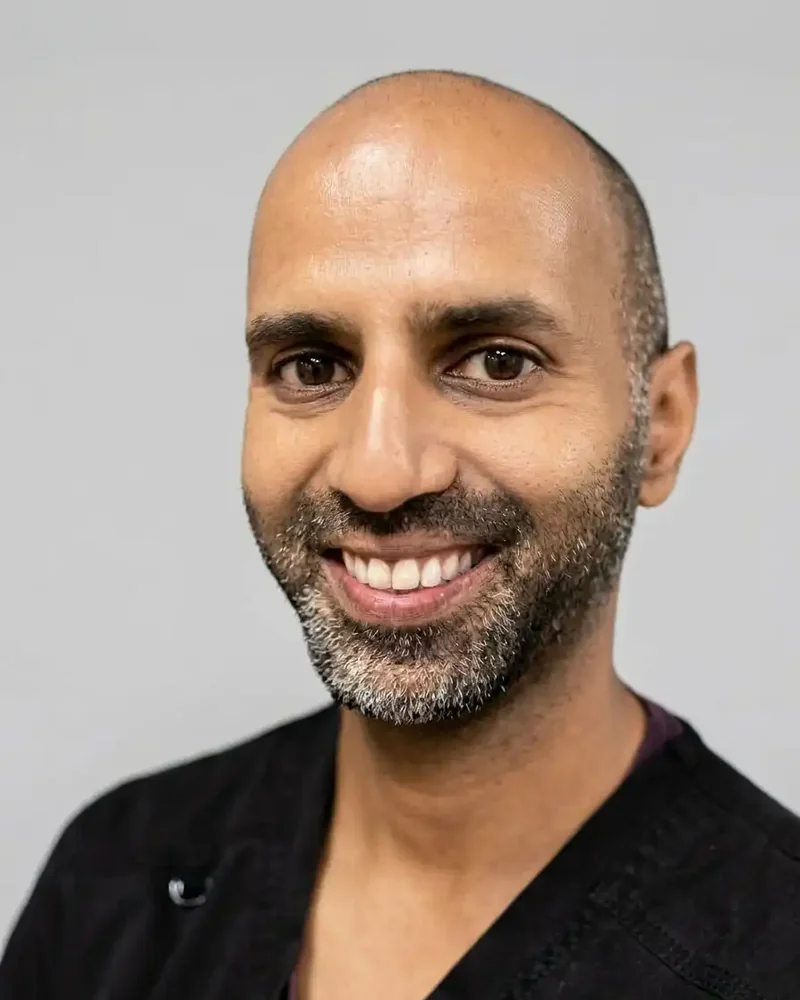
All-on-4 treatment led by Dr Jignesh Patel, Implant Surgeon
GDC No. 81168
Comparison questions
How are All-on-4 implants different from dentures?
Does an upper All-on-4 arch cover the roof of my mouth?
Can my existing denture be attached to implants instead?
How does All-on-4 compare with having eight or ten implants?
Will All-on-4 change how I speak?
Is All-on-4 better value than dentures over time?
Do dentures damage the jawbone?
Where we place All-on-4 implants
All-on-4 treatment is carried out at our Morden and Surbiton practices, which are equipped for implant surgery.
ConfiDental Clinic Morden
245 Saint Helier Avenue, Morden, SM4 6JH
All-on-4 patients travel here from: Sutton, Cheam, Carshalton, Wallington, Worcester Park, St Helier, Mitcham.
About our Morden practice →ConfiDental Clinic Surbiton
359 Ewell Rd, Tolworth, Surbiton, KT6 7BZ
All-on-4 patients travel here from: Kingston upon Thames, Tolworth, Chessington, New Malden, Epsom, Thames Ditton.
About our Surbiton practice →Not sure which practice is closer? Ring either one and we will work it out with you. If our Purley practice is nearest, the team there can arrange your consultation and refer you to Morden or Surbiton for treatment.
Keep reading
← Back to the All-on-4 dental implants guide
All-on-4 cost and finance
What All-on-4 costs per arch and for both arches, what the fee includes, and how to spread the cost.
Read moreThe All-on-4 process
Every step from consultation to your final arch, including same-day teeth, pain and recovery.
Read moreAm I suitable for All-on-4?
How bone loss, gum disease, smoking, age and wearing dentures affect whether All-on-4 will work for you.
Read moreAll-on-4 questions answered
Twenty-plus questions on cost, recovery, cleaning, eating, maintenance and how long All-on-4 lasts.
Read moreBook your free All-on-4 consultation
Come in for an assessment with no obligation. We will examine your mouth, take a 3D scan where it is needed, explain what All-on-4 would involve for you, and give you a written quote before you decide anything.
Not ready to come in? Start online instead.
Send photos for a free implant assessment