Am I Suitable for
All-on-4 Implants?
An honest look at who All-on-4 works for, and when a different treatment is the better answer.
- 4.9 on Google · 800+ reviews
- Dr Jignesh Patel, GDC 81168
- Morden & Surbiton
The short answer
Most people who have lost, or are about to lose, most of the teeth in an arch are candidates for All-on-4. Because the two back implants are placed at an angle, many patients with moderate bone loss can be treated without a bone graft — and where a graft is needed, it is included in the treatment price rather than charged on top. A CT scan at your consultation gives the definitive answer.
The factors that actually matter
Usually suitable
You have lost, or are about to lose, most teeth in an arch
All-on-4 is designed for exactly this situation. If teeth are failing but still present, they can be removed on the day the implants are placed.
Usually suitable
You have some bone loss
The two back implants are angled specifically to make use of bone that is still there, which is why many people who were told they needed grafting can have All-on-4 without it.
Depends
You have severe bone loss
If there is very little bone left, All-on-4 alone may not be enough. Bone grafting or zygomatic implants may be the better route, and the CT scan tells us which.
Depends
You have gum disease
Active gum disease has to be brought under control before implants go in. That is treatable, and it is a delay rather than a refusal.
Depends
You smoke
Smoking raises the risk of an implant failing to integrate and of later problems. We will not refuse to treat you, but we will be straight with you about the higher risk and ask you to stop, at least around the surgery.
Usually suitable
You already wear dentures
Long-term denture wearers are among the people who notice the biggest difference, because a fixed arch does not move when you eat or speak.
Usually suitable
You are older
There is no upper age limit. What matters is your general health and whether you can manage the surgery, not the number on your birth certificate.
Depends
You have a health condition such as diabetes
Well-controlled conditions are usually not a barrier. We will ask about your medical history and, where it helps, speak to your GP before proceeding.
Still not sure whether you would be suitable?
The only way to know is to look. Send four photos of your teeth and your medical history from your phone, and our clinical team will tell you what your options look like — within one business day, at no cost and with no obligation.
How bone loss affects All-on-4
Moderate bone loss is not a barrier to All-on-4 — it is the situation the technique was designed around. Tilting the two back implants lets them anchor in bone you still have rather than bone that would have to be rebuilt first, which is why so many people who were told they needed a graft turn out not to need one. Severe bone loss is a genuinely different question, and only a scan settles it.
Bone is lost because it is no longer being used. The bone around a natural root is maintained by being loaded: every bite sends force down through the root and the bone responds by keeping itself dense. Remove the tooth and that signal stops. The ridge resorbs quickly in the first year after an extraction and then keeps shrinking slowly for the rest of your life. A denture does not halt it, because resting on the gum does not load bone the way a root does. That is why long-term denture wearers so often have a flat ridge and a denture that needs relining every few years.
What matters for planning is that the loss is uneven. In the upper jaw the back goes first and goes furthest, with the sinus dropping down into the space as the bone beneath it thins. In the lower jaw the ridge shrinks towards the nerve canal that runs through it. The front of both jaws, where the canine and incisor roots sat, stays deeper and denser for longer. All on 4 implants bone loss planning is built on that pattern: the front two implants go in upright into the bone that survives best, and the back two are tilted forwards so their length lies in that same solid region, clearing the sinus above and the nerve below while the visible top of the implant still emerges far enough back to support the arch.
The 3D CT scan is what turns this from a hope into a plan. It measures the height of bone below the sinus floor and above the nerve canal, the width of the ridge at every point, the density of what is there, and the exact route the nerve takes. Every implant’s position, angle, length and diameter is worked out from those measurements before you come in for surgery.
Sometimes the scan shows there is not enough, and we will tell you so plainly. If the ridge is too narrow or too shallow even at the front, four implants cannot be placed with the stability an arch needs. The realistic routes then are bone grafting or a sinus lift to rebuild what is missing, which adds months to the plan but is well established — and which is covered by the All-on-4 price where it is what makes All-on-4 possible for you — or, where the upper jaw has lost a great deal of bone, zygomatic implants, which are longer and anchor in the cheekbone, bypassing the missing bone altogether. We will not place implants into bone that cannot hold them.
How often do All-on-4 implants fail?
Rarely, but not never. Published survival figures for full-arch implant treatment are high over ten years and beyond, and the technique has a long clinical track record. We do not put a success percentage of our own next to it, because we will not print a figure we cannot evidence. What we can do is explain how failure happens and tell you honestly where your own risk sits.
There are two distinct kinds. Early failure means an implant does not integrate with the bone in the first weeks or months. It usually announces itself as looseness or persistent discomfort rather than pain. The implant is removed, the site is left to heal, and a replacement is placed a few months later, often in a slightly different position with what we learned from the first attempt. Late failure happens years afterwards and is nearly always peri-implantitis: bacterial inflammation that gradually destroys the bone holding the implant. It is slow and largely painless in its early stages, which is precisely why the annual checks and the radiographs are not optional.
The all on 4 implants failure rate you personally face is far less about the average in a paper than about a short list of factors, most of them within your control. Smoking is the largest of them. Diabetes that is not well controlled comes next, then a history of gum disease that has not been stabilised, then heavy grinding, then simply not cleaning under the arch or not coming back for maintenance. Some medicines matter too — drugs that affect bone turnover and blood thinners in particular — which is why we go through your full medical history at the assessment rather than on the morning of surgery.
If one implant does fail, it does not usually mean losing the arch. Three well-placed implants can often carry the temporary arch while the fourth site heals and a replacement integrates. Losing more than one is more serious and may mean a longer rebuild, and we would explain the options and the costs before doing anything. Nothing about implant treatment can be guaranteed, by us or by anybody else.
Where we think your risk is high, we will say so at the consultation rather than after you have paid. Occasionally we will recommend dealing with something first — stopping smoking, getting blood sugar under better control, treating gum disease properly — before we place implants at all. That is not a way of putting you off. It is the part of the job that decides whether the treatment is still working in fifteen years.
When All-on-4 is not the right answer
There are four situations in which we would point you somewhere else: you still have enough healthy teeth worth keeping, your bone loss is beyond what four implants can carry, you are not in a position to keep up the daily cleaning and the appointments, or your gum disease has not yet been brought under control.
You still have sound teeth on that arch. All-on-4 replaces the whole arch, which means removing whatever teeth are left on it. If several of yours are healthy with good bone around them, taking them out to fit a full arch is a bad trade — natural teeth have a ligament, a sense of bite pressure and a resilience no implant reproduces. Replacing only what is missing with individual dental implants or a bridge keeps what you have.
Your bone loss is severe. Where the scan shows too little bone for four stable implants, grafting or zygomatic implants may be the route — but they are more surgery, and not everyone wants that. A well-made conventional denture or an implant-retained denture on two implants is a legitimate answer at a fraction of the cost and the surgical burden.
You cannot, or will not, maintain it. A fixed arch has to be cleaned in your mouth, by you, every day. If arthritis, a tremor, limited dexterity or poor eyesight make that genuinely hard, or if you know yourself well enough to know you will not keep it up, something removable that you can take out and clean under a tap will serve you better and last longer. That is not a consolation prize; it is the right tool for the situation.
Your gum disease is active. This one is a delay rather than a refusal. Untreated gum disease has to be stabilised before implants go in, because the same bacteria that destroyed bone around your teeth will do the same around an implant. Once it is under control and your cleaning has changed, the conversation reopens.
We would rather turn a case down than take on one we do not believe in, and the free consultation exists partly so that we can. If All-on-4 is not right for you, you will leave knowing why and knowing what is.
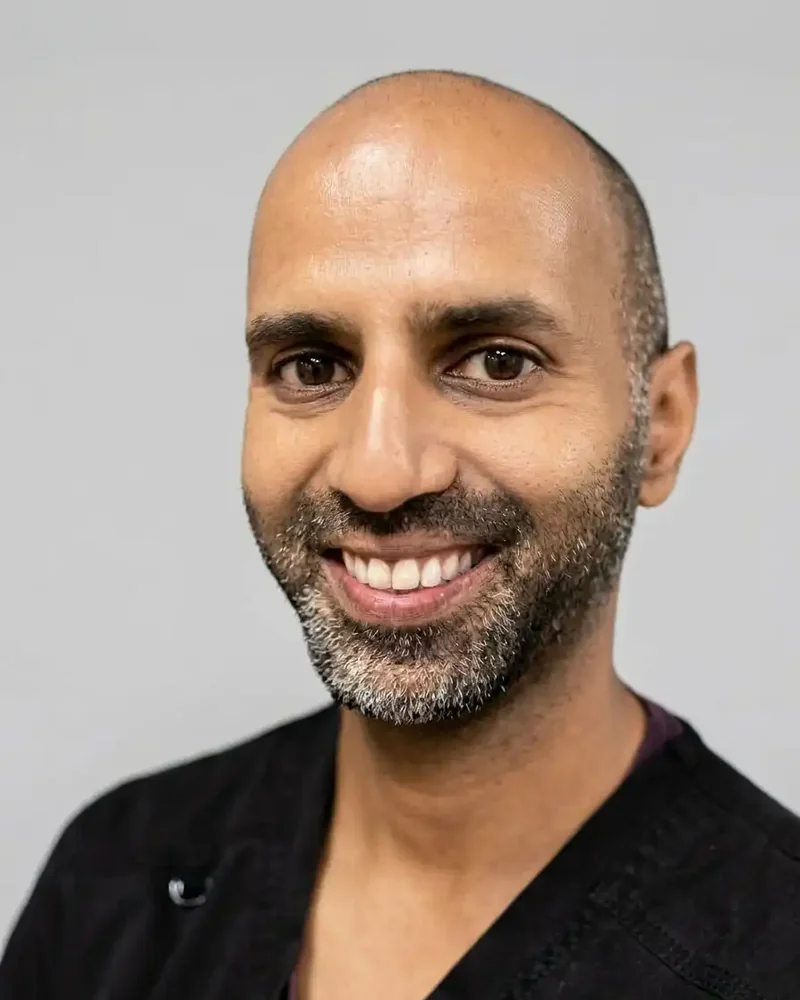
All-on-4 treatment led by Dr Jignesh Patel, Implant Surgeon
GDC No. 81168
Suitability questions
Can I have All-on-4 with severe bone loss?
Can I have implants if I have gum disease?
Can I have All-on-4 if I smoke?
Does diabetes rule out dental implants?
Is there an age limit for All-on-4?
Do All-on-4 implants ever fail?
I already wear dentures — am I still a candidate?
Where we place All-on-4 implants
All-on-4 treatment is carried out at our Morden and Surbiton practices, which are equipped for implant surgery.
ConfiDental Clinic Morden
245 Saint Helier Avenue, Morden, SM4 6JH
All-on-4 patients travel here from: Sutton, Cheam, Carshalton, Wallington, Worcester Park, St Helier, Mitcham.
About our Morden practice →ConfiDental Clinic Surbiton
359 Ewell Rd, Tolworth, Surbiton, KT6 7BZ
All-on-4 patients travel here from: Kingston upon Thames, Tolworth, Chessington, New Malden, Epsom, Thames Ditton.
About our Surbiton practice →Not sure which practice is closer? Ring either one and we will work it out with you. If our Purley practice is nearest, the team there can arrange your consultation and refer you to Morden or Surbiton for treatment.
Keep reading
← Back to the All-on-4 dental implants guide
All-on-4 cost and finance
What All-on-4 costs per arch and for both arches, what the fee includes, and how to spread the cost.
Read moreThe All-on-4 process
Every step from consultation to your final arch, including same-day teeth, pain and recovery.
Read moreAll-on-4 vs dentures
An honest comparison against conventional dentures, implant-retained dentures and traditional full-arch implants.
Read moreAll-on-4 questions answered
Twenty-plus questions on cost, recovery, cleaning, eating, maintenance and how long All-on-4 lasts.
Read moreFind out whether All-on-4 will work for you
A free consultation and CT scan will tell you definitively. If All-on-4 is not right for you, we will tell you that and explain what is.
Not ready to come in? Start online instead.
Send photos for a free implant assessment