Each of our practices have exclusive offers - Click the links to find out -Purley,Morden,Surbiton
All-on-4 dental implants

All-on-4 Dental Implants:
Your Questions Answered

Straight answers to the questions our implant patients ask most often.

  • 4.9 on Google · 800+ reviews
  • Dr Jignesh Patel, GDC 81168
  • Morden & Surbiton

The short answer

All-on-4 implants are cleaned daily with a soft brush, interdental brushes and a water flosser, and checked by a hygienist two to three times a year. Looked after that way they routinely last well over a decade, and often much longer. The arch itself may be replaced before the implants are.

Cost and finance

What does All-on-4 cost, and what is included in the fee?

All-on-4 at ConfiDental Clinic is £9,950 for one arch, or £18,950 if both arches are treated. Those are fixed figures, not starting points: what we quote is what you pay, and the price does not climb as treatment goes on. The fee covers the consultation and full implant assessment, the 3D CT scan and digital treatment planning, any extractions needed on the arch being treated, bone grafting or a sinus lift if the scan shows you need one, four implants placed under local anaesthetic, the fixed temporary arch fitted on the day of surgery, the final fixed arch once healing is complete, and every review appointment in between. Grafting is the item on that list worth pausing on, because it is the unexpected bill patients most often brace for, and here it does not arrive. Three things sit outside the fee and are quoted separately: intravenous sedation if you choose it, treatment on the opposing arch, and routine hygienist appointments once your treatment is finished. You receive a written quote before you commit.

Is finance available for All-on-4?

Yes. Choose a term of 12 months or less and the credit is interest-free, so you repay exactly what the treatment costs — £9,950 for one arch over 12 months is £829.17 a month, and £18,950 for both arches is £1,579.17. Choose a longer term, up to a maximum of 60 months, and interest is charged on the whole balance, so you repay more than the treatment price. The interest-free rate applies to the shorter terms only; it is not a free introductory period on a longer plan. Our finance calculator shows the exact figures for any term before you apply. Every application is subject to status and an affordability check, and nothing is agreed until you have a written quote to take away.

Can I have just one arch treated?

Yes, and many people do. If your lower teeth are sound and only the upper arch is failing, there is no reason to treat both — All-on-4 on one arch is a complete treatment in itself at £9,950. Where both arches are involved, treating them together at £18,950 costs less than two separate courses. What matters clinically is that the two arches bite together properly, so we plan the whole mouth even when we are only treating half of it.

The procedure and recovery

What are All-on-4 dental implants?

All-on-4 is a full arch of fixed teeth supported by four dental implants. The two implants at the front go in upright; the two at the back are tilted forwards so they anchor in the denser bone further forward in the jaw. That angling is the whole idea, because it lets us support a complete arch without first rebuilding bone at the back. The arch is screwed to the implants, so it stays in place while you eat, sleep and talk.

Does All-on-4 surgery hurt?

The surgery itself should not hurt. It is carried out under local anaesthetic, so the area is fully numb; you will be aware of pressure and movement, which is normal, but not of pain. Intravenous sedation is available if you would rather be sleepy and detached throughout. Afterwards, the honest picture is soreness, swelling and sometimes bruising for a few days, at its worst around the second or third day and settling over the following week. Most people manage on the painkillers we recommend. If pain is getting worse rather than better after the first few days, ring us.

Can I really leave with teeth on the same day?

In most cases, yes. A fixed temporary arch is attached to the implants at the end of the surgical appointment, so you walk out with a full set of teeth rather than a gap or a denture. It is fixed, not removable, and it is designed to look right and to let you speak normally straight away. It is not built for heavy chewing, though — while the implants are integrating you keep to softer food, and we go through exactly what that means before you leave.

How long does the whole treatment take from first appointment to final teeth?

Usually three to six months from your first consultation to the final arch. The consultation takes about 45 minutes; the CT scan and digital planning follow within a week or two; extractions, the four implants and the fixed temporary arch all happen in a single surgical appointment of three to five hours. Then comes the longest part — three to six months of healing while the implants integrate with the bone, with periodic reviews. Once integration is confirmed we take final impressions and fit your permanent arch.

What does All-on-4 aftercare involve in the first two weeks?

All-on-4 implants aftercare in the early weeks is mostly about protecting the healing site. Rinse gently with warm salt water from the day after surgery, keep brushing your other teeth normally, and clean around the temporary arch as we show you rather than avoiding the area altogether. Sleep with your head slightly raised for the first few nights, use ice on the outside of the face on the first day, and avoid alcohol, smoking, hot food and strenuous exercise while things settle. Expect swelling to peak around day two or three. We review you shortly after surgery, and you can ring the practice in between if anything concerns you.

What if I am frightened of the dentist?

Say so at the first appointment — a lot of people who come to us for full-arch treatment have avoided dentists for years, often because of the state of their teeth, and we are used to it. Nothing is decided on the day you walk in. The consultation is a conversation and an examination, not treatment. Intravenous sedation is available for the surgery if you want it, and it means most patients remember very little of the appointment. You can bring someone with you, ask us to stop at any point, and take the written plan away to think about for as long as you need.

Where can I have All-on-4 treatment with ConfiDental Clinic?

At our Morden and Surbiton practices. Both are equipped for implant surgery and for the 3D CT scanning that the planning depends on, and treatment is led by Dr Jignesh Patel, Implant Surgeon, GDC No. 81168. We also see patients from Sutton, Cheam, Carshalton, Wallington, Worcester Park, Epsom, Chessington and Kingston upon Thames. If you are not sure which practice is easier for you, ring us and we will work it out with you when we book the consultation.

Living with All-on-4

How do I clean All-on-4 implants day to day?

All-on-4 dental implants cleaning takes about five minutes a day and is not difficult once it is a habit. Brush the arch morning and night with a soft brush, exactly as you would natural teeth. The part that matters most is underneath: there is a small space between the arch and your gum where plaque collects, and it has to be cleaned every day with a water flosser, superfloss or interdental brushes, whichever you get on with best. We will show you the technique before you leave and check it at every review. Neglecting that space is the most common reason implants get into trouble years later.

What can I eat, and when?

All-on-4 implants eating comes in three stages. For the first week or two you stay on soft food — soup, eggs, fish, pasta, mashed vegetables, yoghurt — and avoid anything that needs a hard bite. From then until the final arch is fitted you can widen the range considerably, but you keep away from crusty bread, nuts, hard fruit and anything you would have to tear at, because the temporary arch is not built for those forces. Once the permanent arch is in place, most people eat normally again, including things dentures had made impossible. Even then, it is sensible to treat very hard items with respect: teeth on implants can chip just as natural teeth can.

Can I take All-on-4 teeth out to clean them?

No — and for most people that is the point of having them. The arch is screwed to the implants and is removed only by your dentist, with instruments, at a maintenance visit. There is nothing to soak overnight and nothing to lose. The trade-off is that cleaning has to be done in the mouth, around and underneath a fixed arch, which takes a little more skill than dropping a denture in a glass. If the ability to take your teeth out matters to you, an implant-retained overdenture may suit you better, and we are happy to discuss it.

Will All-on-4 teeth look natural?

They should look like teeth, not like dentures. The shape, shade and position are chosen with you rather than for you, and the temporary arch you wear for several months acts as a working trial: if something about the length, the shade or the way the teeth show when you smile is not right, we change it before the final arch is made. We will also be realistic with you — a full arch has to be built to a shape that works for your bite and your lip support, so it is not simply a copy of the teeth you had at twenty.

Will All-on-4 affect my sense of taste?

It should improve it if you have been wearing a full upper denture. A conventional upper denture covers the palate to hold by suction, and that covering blunts both taste and the feeling of hot and cold. A fixed upper arch on implants is supported by the implants, so the roof of the mouth stays uncovered and food tastes and feels much more like it used to. Lower arches were never palate-covered, so there is no change there beyond the improvement in chewing.

Longevity and maintenance

How long do All-on-4 implants last?

The implants are intended to last for decades; the arch fitted on top will need replacing sooner. The implants themselves are titanium posts fused into your jawbone, and published survival figures for full-arch implant treatment are high, though nobody can guarantee an individual implant. The bridge that sits on top is different: it is a wearing part, like a tyre. Depending on the material and on whether you grind your teeth, it may need repairs over the years and eventually replacing. Daily cleaning and regular hygienist visits make more difference to how long everything lasts than any other single factor.

What ongoing maintenance do All-on-4 implants need?

All-on-4 implants maintenance means daily cleaning at home plus professional care a few times a year. At the practice we check the fit and the screws, take radiographs periodically to look at the bone level around each implant, and clean the areas you cannot reach; the hygienist appointments after treatment are charged separately from the treatment fee. Every few years the arch may need to be unscrewed, cleaned thoroughly underneath and refitted. If you grind your teeth we will make you a night guard to protect the arch. None of this is onerous, but it is not optional either — implants that are never maintained are the ones that fail.

What is the failure rate for All-on-4 implants?

The all on 4 implants failure rate reported in the published literature is low, and full-arch implant survival over ten years and beyond is well documented, but we will not attach a percentage to our own results because we will not publish a figure we cannot evidence. What we can tell you is how failure happens. Early failure means an implant does not integrate with the bone in the first months; it is uncommon, and it is usually managed by removing the implant, letting the site heal and placing another. Late failure is generally infection in the bone around an implant, caused by plaque left undisturbed. Smoking, uncontrolled diabetes, a history of gum disease, heavy grinding and skipped cleaning all increase the risk. Losing one implant does not usually mean losing the arch.

Can implants get gum disease?

Yes, in effect. The condition is called peri-implantitis: inflammation of the gum and loss of bone around an implant, driven by plaque, and it behaves much like gum disease around natural teeth. The warning signs are bleeding or puffy gum around the arch, a bad taste, tenderness or a smell you cannot brush away. Caught early it can usually be treated; left for years it can loosen an implant. This is precisely why the daily cleaning underneath the arch and the regular hygienist appointments matter so much.

What happens if the arch chips or a screw comes loose?

Ring the practice and we will see you. A chipped tooth on the arch can usually be repaired, and a loosened screw is retightened — neither is an emergency in the sense of danger, but neither should be left, because a loose arch puts uneven load on the implants. Chips are more likely if you grind your teeth or bite something very hard, which is why we make a night guard for grinders. Repairs once your treatment is complete fall outside the treatment fee, in the same way routine hygienist visits do, and we will tell you the cost before we do the work.

Suitability

Am I too old to have All-on-4?

Almost certainly not. There is no upper age limit on implant treatment, and losing most of your teeth is more common later in life, so older patients are a large part of who this treatment was designed for. What we assess is your general health rather than your age: whether long-term conditions are well controlled, what medicines you take — bone medicines and blood thinners in particular need discussing — and whether you can manage a surgical appointment of several hours. If any of that raises a question, we will talk to your GP before going ahead rather than pressing on regardless.

Can I have All-on-4 if a dentist has told me I need a bone graft?

Frequently, yes, and this is one of the main reasons the technique exists. When teeth have been missing for a while, the bone at the back of the jaw resorbs first, which is what makes conventional implants there need grafting or a sinus lift. Tilting the back implants forwards lets them anchor in the more solid bone nearer the front, so the graft is often unnecessary. Where it is necessary, it is covered by the All-on-4 fee rather than billed on top, so being told you need a graft does not mean being told you need to find more money. It is not a universal answer: where very little bone remains anywhere, zygomatic implants may still be the right route. Your CT scan gives a definite answer rather than a guess.

Can I have All-on-4 if I smoke?

You can, but you should go in knowing the risk is higher. Smoking constricts blood vessels and reduces the blood supply that healing tissue depends on, so implants in smokers are more likely to fail to integrate and more likely to develop bone loss around them later. We will not turn you away, and we will not lecture you, but we will ask you to stop before surgery and to stay off cigarettes through the healing period at the very least. If you have been thinking about stopping anyway, this is the moment when it pays off most.
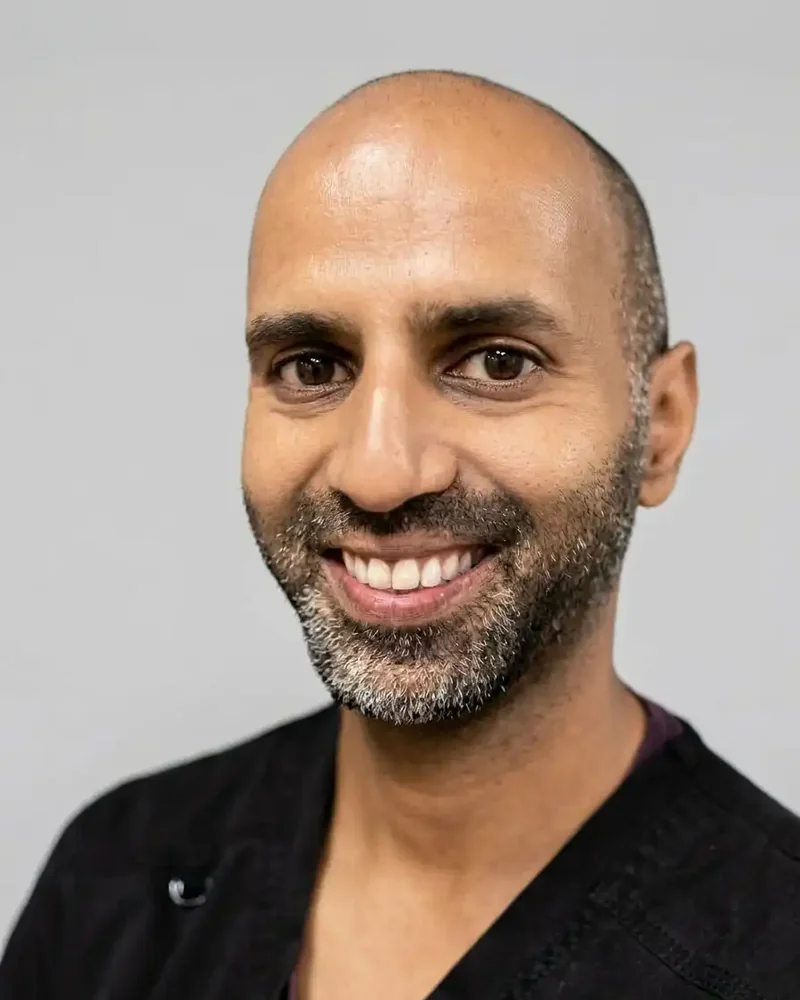
Dr Jignesh Patel, Implant Surgeon at ConfiDental Clinic

All-on-4 treatment led by Dr Jignesh Patel, Implant Surgeon

GDC No. 81168

Where we place All-on-4 implants

All-on-4 treatment is carried out at our Morden and Surbiton practices, which are equipped for implant surgery.

ConfiDental Clinic Morden

245 Saint Helier Avenue, Morden, SM4 6JH

020 8648 2600

About our Morden practice →

ConfiDental Clinic Surbiton

359 Ewell Rd, Tolworth, Surbiton, KT6 7BZ

020 8399 1291

About our Surbiton practice →

We treat All-on-4 patients travelling from Sutton, Cheam, Carshalton, Wallington, Worcester Park, Epsom, Chessington and Kingston upon Thames. If our Purley practice is closer to you, the team there can arrange your consultation and refer you for treatment.

Still have a question?

Book a free consultation and ask us directly. There is no obligation and no charge for the assessment.