Returning to Crunchy Foods After All-on-4 Implants in Morden: Your Eating Timeline
Rediscovering the foods you enjoy is one of the real rewards of full-mouth implant treatment. Once your smile is complete, everything from crusty bread to a crisp apple starts to look appealing again — but a little patience while you heal protects the result.
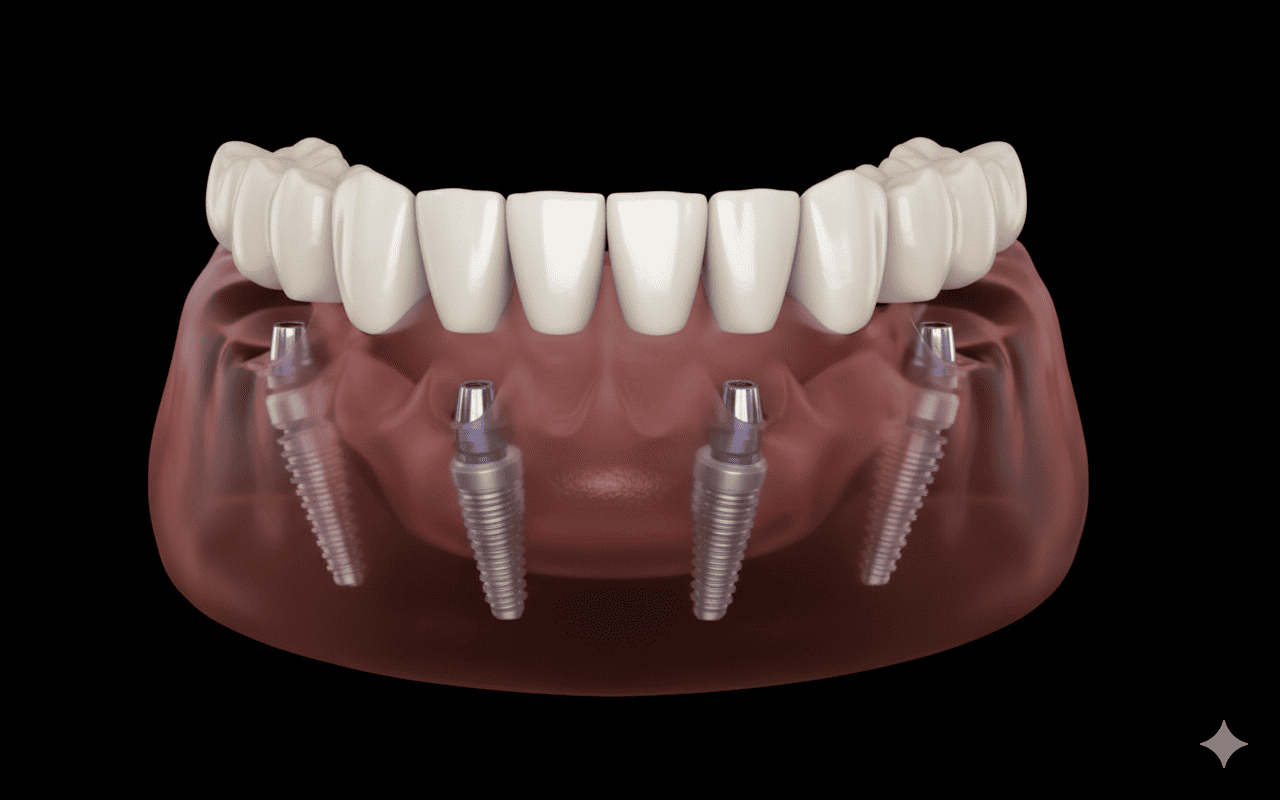
All-on-4 dental implants in Morden provide a fixed, full-arch replacement designed for comfort, confidence and day-to-day chewing. Exactly when you can bite into something crunchy varies from person to person, shaped by your healing, your bone quality, your temporary bridge and your dentist's advice. Easing back gradually, stage by stage, keeps needless pressure off your new implants while they bed in.
Let Your Implants Bond Securely First
Implants need time to fuse with the jawbone in a process known as osseointegration — the bone slowly grows around the implant posts to form a stable foundation for your final bridge. This happens over months rather than days.
A fixed temporary bridge quickly makes eating and smiling easier, but it is not a green light for every food. Tough, sticky and very crunchy items can overload healing implants or the temporary teeth, which are intentionally softer than the permanent bridge to come.
Healing runs at a different pace for everyone, and yours can depend on:
- Your overall oral health
- Your bone density and how well you heal
- Your medical history and any medicines you take
- Whether you smoke
- How complex your treatment was
Your mouth can feel comfortable long before the deeper healing has finished, so sticking to your dentist's food advice safeguards the work happening quietly below the gumline.
Your Stage-by-Stage Eating Timeline
The question almost everyone asks is "how long?". With All-on-4, count on a softer diet for roughly three months — longer than a single implant, because a full arch has to integrate and the temporary bridge cannot take full biting force yet. The table below shows a typical path, though your own plan always takes priority.
| Stage | What you can usually eat | What to avoid for now |
|---|---|---|
| Day of surgery | Cool liquids and smooth foods — soup, yoghurt, smoothies (sipped, not through a straw) | Hot drinks, alcohol and anything that needs chewing |
| First week | Soft foods needing little chewing — mashed potato, scrambled eggs, well-cooked pasta, flaky fish | Crunchy, chewy, sticky or very hot foods |
| Weeks 2–6 | More texture, gradually — minced meat, slow-cooked vegetables, soft fruit, tender rice | Hard or sticky foods, and biting with your front teeth |
| Up to ~3 months (temporary bridge) | A softer diet continues — the temporary bridge is made deliberately softer to protect the implants | Nuts, crusty bread, raw carrot, corn on the cob |
| After the final bridge (~3–6 months) | A near-normal diet, including most crunchy foods, once your dentist confirms healing | Ice, popcorn kernels, very hard nuts and hard sweets (best avoided long-term) |
Because timings differ between patients, use this as a guide rather than a fixed schedule, and check with your dental team before stepping up to the next stage.
Building Up Your Diet Gradually
For the first stretch, smooth and soft meals are the easiest to handle. Pick foods that need little to no chewing, and keep them lukewarm if things feel tender — very hot food can be uncomfortable early on, so it is wise to hold off hot drinks and straws for the first day or two.
Reliable early choices include soups, yoghurt, mashed vegetables, scrambled eggs and blended meals. As you heal, your dentist may suggest adding a bit more texture, for example:
- Flaky fish and soft pasta
- Slow-cooked vegetables
- Minced meat dishes
- Soft fruits, such as ripe bananas or peeled pears
- Tender rice dishes
Chop food into small pieces, take your time chewing, and spread the load across both sides of your mouth rather than leaning on one spot. Feeling better is a good sign, but it does not necessarily mean your implants are ready for heavy biting.
Reintroducing Crunchy Foods at the Right Time
Hold off on crunchy foods until your dentist is satisfied with your healing and the stability of your restoration — for many patients that is after the final bridge is fitted, depending on the treatment plan and bite.
A few foods call for particular care because they are tricky to control or deliver a sharp, concentrated force: nuts, popcorn, ice, hard sweets, crispbread, crusty rolls and raw carrots, along with biting straight into a whole apple or corn on the cob. Happily, there are gentler ways to enjoy them — slice apples thinly, steam root vegetables until soft, and reach for softer breads. If anything feels uncomfortable, pause and check with your dental team before you try it again.
Protecting Your New Smile for the Long Term
All-on-4 dental implants in Morden offer a strong, natural-looking way to replace missing teeth, but they still rely on good daily care. Clean around the bridge and gumline each day with the tools your team recommends, and keep up your hygiene appointments and implant reviews so your gum health, bite and restoration can be monitored.
Try not to use your teeth to open packaging or grip objects, and get advice quickly if you notice ongoing discomfort, swelling, looseness, a change in your bite or difficulty chewing — acting early helps protect your results. And if you are ever unsure about going back to crunchy foods, a short review will give you clear, tailored guidance.
Frequently Asked Questions
How long will I be on soft foods after All-on-4?
Expect a softer diet for about three months. It starts with liquids and cool, smooth foods on day one, soft foods through the first week, then more texture added gradually — the temporary bridge is purposely soft, so you stay gentle for longer than with one implant.
When is it safe to eat crunchy foods again?
Typically once the final fixed bridge is in place and your dentist confirms the implants have fused, often around three to six months. Bring crunchy foods back in slowly rather than all at once.
Why does All-on-4 need a longer soft-food phase?
A full arch on four implants needs time to bond with the bone, and the temporary bridge is not made for full chewing force. Keeping to softer foods protects that healing and reduces the chance of implant problems.
Which foods should I avoid for good?
Even with the final bridge, be cautious with — or steer clear of — ice, popcorn kernels, very hard nuts and hard, sticky sweets, which can crack the bridge or strain the implants. Cutting firmer fruit and veg into pieces makes them safer.
Can I have coffee after the surgery?
Avoid hot drinks for the first day or two, since heat can worsen swelling, and skip straws early on because the suction can disturb healing. Lukewarm drinks are usually fine after a few days, with most people back to normal within a week or so.
What if a food hurts or feels like it moved something?
Stop eating it, switch to something softer, and get in touch with the clinic. Persistent discomfort, swelling, looseness or a change in how your teeth meet should always be checked without delay.
Restore Your Smile With a Secure, Natural-Looking Solution
If any part of your recovery leaves you unsure, a review at our Morden practice can confirm how well you are healing and what your safest next steps are.
At ConfiDental Clinic, we help you explore a long-lasting way to replace missing teeth and restore everyday confidence. Discover how All-on-4 dental implants in Morden can provide a stable, full-arch smile with fewer implants. Our team will discuss your needs, answer your questions and create a treatment plan suited to you. Ready to take the next step? Contact us to arrange a consultation.
Teeth in a Day Implants in Morden: Who Is a Suitable Candidate?
Teeth in a Day implants in Morden explained — how same-day fixed teeth work, who is a suitable candidate, costs, timeline and FAQs. Book an implant consultation.
All-on-4 Dental Implants in Morden: Costs, Process, Longevity and FAQs
All-on-4 implants in Morden — fixed, same-day teeth on four implants. Costs, the step-by-step process, how long they last, recovery and FAQs. Book a free consultation.
Loose Dentures in Morden: Causes, Treatment Options, Costs and Timelines
Why dentures go loose and how to fix them in Morden — adhesive, relines, new dentures, mini implants and All-on-4. Compare costs, timelines and book a free consultation.