
Moving to St Helier? How to Register With a Dentist and Transfer Your Records
Moving home comes with a long to-do list, and dental care is one of the easier jobs to tick off if you tackle it early. If you are settling in St Helier, sorting your family’s dentist before problems arise means you keep continuity of care and are not left scrambling if someone gets toothache.
Here is the reassuring part: signing up with a dentist is far simpler than many people expect. You can join any practice that has space, there are no catchment-area rules like there are with a GP, and you can switch whenever you like. This guide walks through how it works, how to move your records, what NHS and private care involves, and how to get urgent help if you need it before you are settled.
How Registering With a Dentist Actually Works
Dentists do not work like GP surgeries, and knowing the difference saves a lot of worry:
- There are no postcode or catchment restrictions — you can choose a practice near your home, your children’s school or your workplace
- You can switch dentist at any time, for any reason, with no notice, no reason and no referral needed
- NHS dental “registration” is not a permanent list like a GP’s — if you do not attend for a while it simply lapses, and you can sign up again with any practice accepting patients
- You are not tied to a single practice, so you can be seen at more than one if that suits you
In practice, joining a new dentist usually just means contacting the practice, checking they have availability, and completing a short new-patient form with your details and medical history at your first visit.
NHS or Private? What Families in St Helier Should Know
Both routes are worth understanding, because NHS availability is tight across much of the country and many practices are not currently taking on new NHS patients. The most reliable approach is to contact practices directly and ask whether they are accepting new NHS patients right now, as capacity changes when spaces open up. A mixed practice can offer both NHS and private care, and joining privately sometimes makes it easier to move to NHS care when a place becomes available.
NHS treatment in England is charged in three set bands, and many people qualify for free care:
| NHS band | What it covers | Cost (England, Apr 2026) |
|---|---|---|
| Band 1 | Check-up, X-rays, scale and polish if clinically needed, advice | £27.90 |
| Band 2 | Fillings, extractions, root canal treatment | £76.60 |
| Band 3 | Crowns, dentures, bridges | £332.10 |
NHS treatment is free for under-18s, under-19s in full-time education, anyone pregnant or who has given birth in the last 12 months, and people receiving certain income-based benefits. Private care costs more but usually offers greater appointment availability, more time and a wider choice of materials and cosmetic options.
Gather Your Records Before You Leave Your Old Practice
Dental records do not move automatically when you change practice, so it helps to request yours before you leave your old area — moving periods get busy for families and dental teams alike. Ask your previous practice how it handles record requests; they may be able to provide a clinical summary, treatment history, recent X-rays and details of any referrals or planned treatment. Because records are private health information, they are only shared securely and with your permission.
Keep these details together for each family member:
- Full name, date of birth and your former dentist’s contact details
- Current medicines, allergies and relevant medical conditions
- Details of any braces, dentures, implants or ongoing treatment
- Information about planned fillings, crowns or specialist referrals
You do not need to understand every item in the notes — your new dentist can review what is useful and ask questions at your first appointment.
Transfer Your Records Safely and Smoothly
Once you have chosen a new practice, you may be asked to complete a consent form before records are requested. Your new dentist can then contact your former practice directly, or you can hand over copies you already have; either way, only relevant information is shared. Past records give useful context — previous treatment, areas being monitored, the date of recent X-rays — and help the dentist judge what is still current. A fresh examination is always needed too, because teeth, gums and general health change over time.
If You Need Urgent Care During Your Move
Do not wait for records or a completed registration if someone needs urgent dental attention. Severe toothache, facial swelling, bleeding, dental trauma or a broken tooth should be explained to a practice promptly, and the team can assess the immediate problem even if your records are still on their way.
If you cannot get seen and you are in pain, call NHS 111 — it can arrange urgent dental care even if you are not registered anywhere. Urgent NHS treatment is charged at the Band 1 rate (£27.90 in England), unless you qualify for free care.
Registering Your Children and the Whole Family
Getting children signed up early takes one job off the list and means they are settled before they ever need treatment. A routine check-up lets the dentist look at tooth development, early decay, gum health and brushing habits, and helps children get comfortable in a new dental setting. It is also a natural point to mention anything already under way, such as orthodontic treatment, a loose filling or a tooth that has been causing discomfort.
When registering a child, be ready to share their medical history, allergies, medicines, previous treatment and former practice details; NHS information may be requested where relevant. In the meantime, keep up the basics — brushing twice a day with fluoride toothpaste and limiting frequent sugary snacks and drinks between meals.
Frequently Asked Questions
Do you have to register with a dentist in the UK?
Not in the formal way you register with a GP. There are no catchment areas for dentists — you can attend any practice with space. NHS “registration” also is not a permanent membership; if you do not attend for a while it simply lapses, and you can join again with any practice accepting patients.
Can I register with more than one dentist?
Yes. Unlike GP surgeries, you are not limited to one dental practice, so you can be seen at more than one if it suits you — though most families find it simpler to keep everyone in one place.
Do my dental records transfer automatically when I move?
No. Records do not follow you automatically — your new practice needs to request them from your old one, usually with your written consent. Asking your previous dentist for a summary before you move makes this smoother.
Can I switch dentist whenever I want?
Yes. You can change dentist at any time, for any reason, without giving notice or a referral. You simply join a new practice that is accepting patients.
How do I find an NHS dentist accepting new patients?
Contact practices directly and ask whether they are currently taking new NHS patients, as availability changes as spaces open. The NHS “Find a dentist” tool is a good starting point, and mixed practices sometimes offer a private route with the option to move to NHS care later.
How much does an NHS dental appointment cost?
In England, charges are set in three bands from April 2026: Band 1 (check-up) £27.90, Band 2 (fillings and extractions) £76.60 and Band 3 (crowns and dentures) £332.10. Treatment is free for several groups, including under-18s and anyone pregnant or who has recently given birth.
What if I need emergency care before I have registered?
You do not need to be registered to be seen urgently. Contact a practice promptly about severe pain, swelling, bleeding or trauma, or call NHS 111, which can arrange urgent dental care even if you are not registered anywhere.
Do I need to live near the practice?
No. Dental practices do not restrict by postcode, so you can choose one near your home, your children’s school or your workplace — whatever fits your routine.
Book Your Family’s First Visit With Confidence
Registering early gives your household time to discuss NHS and private options, share medical information and arrange appointments that suit school and work routines — and it makes ongoing treatment far easier to manage before it becomes a bigger concern. When you arrange a first visit, be clear about any urgent symptoms, recent problems or treatment already under way, so the team can plan the right next step.
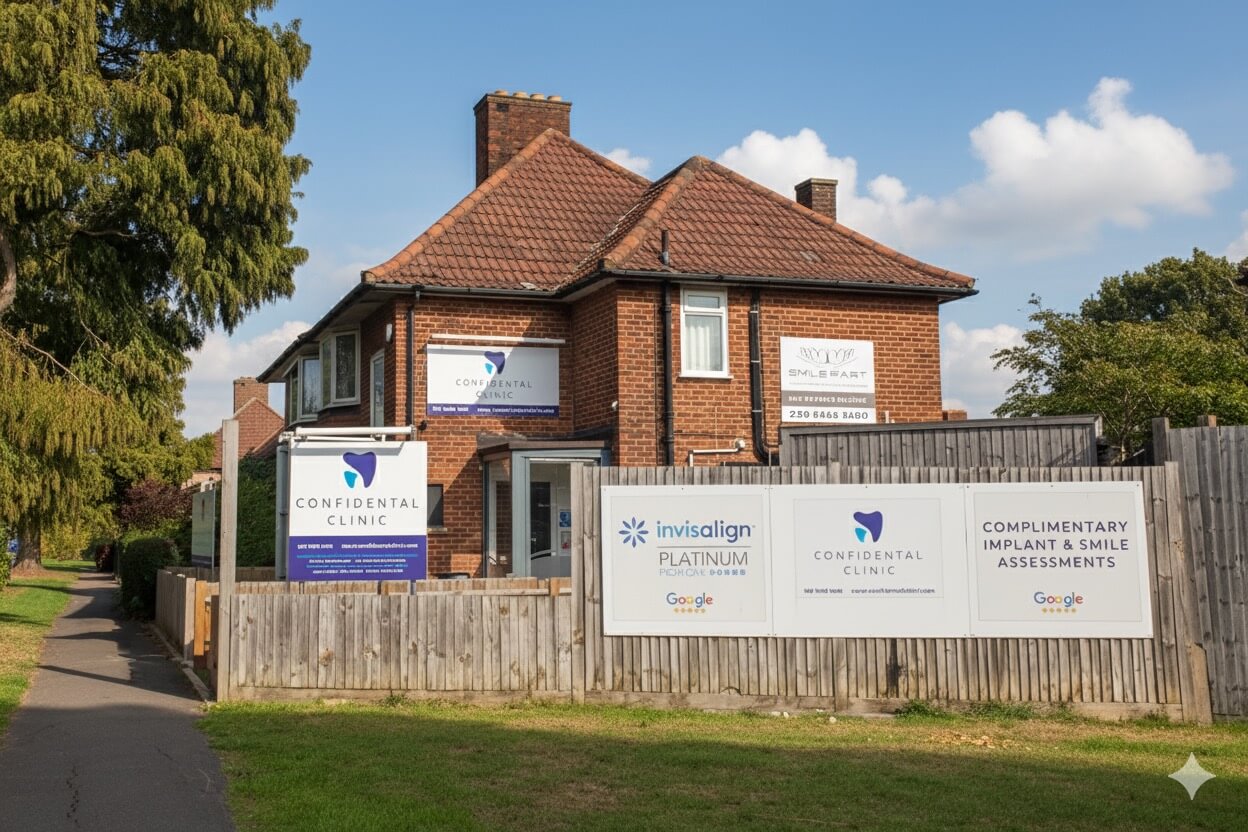
At ConfiDental Clinic, we provide NHS and private dentistry with thoughtful, personalised care for patients in St Helier and the surrounding Morden area. If you are looking for a dentist in St Helier, our team is ready to discuss your needs and treatment options. You can also contact us to arrange an appointment at a time that suits you.

How to Tell If Mouth Pain Is from Your Tooth or Gums
Learn how to spot the difference between gum and tooth pain. Know when to see a dentist in Purley, Morden or Surbiton before it gets worse.
Don’t Ignore Mild Tooth Pain
Mild aches could point to infection. Get to the root early with timely root canal treatment in Purley, Morden or Surbiton this spring.
Your Local Dentist in Morden - ConfiDental Clinic St. Helier
Discover exceptional dental care at ConfiDental Clinic in St. Helier, Morden. Modern treatments, experienced team, and comprehensive NHS and private services in a welcoming environment.